(262) 404-4056
Roofing Contractor in Racine, WI · Racine, WI

Roofing Contractor in Racine, WI Built for Lake Michigan Winters and Storms

Roofs in Racine take a beating. Wind comes straight off Lake Michigan, lake-effect snow piles up heavy and wet, and every winter brings dozens of freeze-thaw swings that turn eaves into ice dams. Then summer arrives with humid air, hail and straight-line winds. Add a housing stock where a lot of homes went up before 1940, with steep pitches, brick chimneys and plank sheathing hidden under two layers of shingles, and small problems get expensive quickly. Racine Roof Repair Experts fixes leaks, flashing, storm damage and ice dams, and we install new roofs on homes and duplexes. We find the actual cause and fix it properly.

Racine Roof Repair Experts Roofing Contractor in Racine, WI work in Racine, WI

Request a free estimate

No obligation. Fast, honest quotes.

🔒 Your information is never shared.

  • Bonded and insured
  • Financing available
  • Photos taken on every visit
  • Clear written estimates before work starts
  • Ice dam and winter leak response
  • Serving a 20-mile radius around Racine
Why local matters

Why Racine Roofs Need a Contractor Who Knows the Lakeshore

A roof that would last 25 years somewhere milder can wear out years sooner on the Lake Michigan shoreline. Racine's weather, its century-old housing and its patchwork of local rules all change how roofing has to be done here. Here's what sets this area apart.

Lake-Effect Snow, Freeze-Thaw Cycles and Summer Storms

Racine gets roughly 35–45 inches of snow a season. January highs sit near 29–30°F with lows in the mid-teens, and Arctic outbreaks push temperatures below zero. From November through March the temperature crosses 32°F again and again, and each of those freeze-thaw cycles feeds ice dams at the eaves. Northeast winds can drop bands of heavy, wet lake-enhanced snow right along the shore. From April through August, thunderstorms bring hail, straight-line winds and the occasional derecho, so bruised shingles, lost granules and blown-off ridge caps are common. Lakefront fog and humidity also speed up algae streaking and rust on fasteners. Summer highs near 80°F followed by subzero January nights expand and shrink sealants and flashing every year. On top of that, the practical roofing season only runs from about April to November.

Century-Old Homes, Postwar Suburbs and New Subdivisions

Racine grew as a manufacturing city around Case, S.C. Johnson, Horlick's and Twin Disc, and a large share of the homes in the city proper were built before 1940. You'll find balloon-framed two-stories, American Foursquares, Queen Annes with turrets and many valleys, worker cottages, bungalows and Milwaukee-style duplexes. Many still have skip sheathing or plank decking under several shingle layers, along with box or built-in gutters, thin attic insulation and old chimney flashing. Mount Pleasant, Caledonia, Sturtevant, Elmwood Park and Wind Point filled in after WWII with ranches, Cape Cods and split-levels that are now on their second or third roof. Subdivisions built from the 1990s to the 2020s along the I-94 corridor are reaching their first replacement. Downtown's brick commercial blocks mostly have flat built-up, EPDM or TPO roofs.

Permits, Historic Districts, HOAs and Storm-Contracting Law

Re-roofing a one- or two-family home falls under Wisconsin's Uniform Dwelling Code. Commercial work follows the Wisconsin Commercial Building Code. Racine, Mount Pleasant, Caledonia, Kenosha, Franklin and Oak Creek each run their own building inspection office, and many of them want a permit for tear-offs or re-decking. Code allows no more than two shingle layers and requires ice barrier underlayment at the eaves extending inside the exterior wall line, so full tear-offs are the norm. In historic districts like the Southside and Old Main Street, the Racine Landmarks Preservation Commission may need to review changes to roofing material or color. Newer subdivisions often have HOA shingle rules. Under Wis. Stat. 100.65, no contractor can promise to cover your insurance deductible. Pre-1978 trim also calls for lead-safe work practices.

A Cost-Conscious, Word-of-Mouth Market

The City of Racine has about 77,000 residents and a median household income below the state median. Many of the homes are long-held family properties or rental duplexes owned by small landlords, so honest advice on whether to repair or replace, phased repairs and financing make a real difference. The suburbs around Racine are more affluent, and owners there tend to invest in architectural shingles, standing-seam metal and curb appeal. Growth along the I-94 corridor, including the Microsoft data center development in Mount Pleasant, is bringing new residents and pushing home values up. After every hailstorm, out-of-state storm chasers start knocking on doors. That's why people around here still hire based on local reputation.

Services

Roofing Services for Racine Homes, Duplexes and Commercial Buildings

We handle everything from a single missing shingle to a full tear-off on a three-story Victorian. Rather than list all of our services one by one, we've grouped them the way problems actually show up on Racine roofs. Each job starts with an inspection, photos and a written estimate you can compare.

Racine Roof Repair Experts Roofing Contractor in Racine, WI project in Racine, WI (2)
Featured

Ice Dam Removal & Winter Leak Repair

Professional ice dam removal, gutter ice removal, roof snow and ice removal, ice dam leak repair, winter roof leak repair, and help with water damage from ice dams. We also install roof heat cable or heat tape where it makes sense.

How we do it
We use low-pressure steam to melt channels and clear ice without hammers or chisels that crack shingles. We stop the active leak, photograph the damage, and then look at the attic for the heat loss and ventilation problems that caused it.
In Racine
Ice dams are the signature roofing problem in Racine. Cape Cods in Elmwood Park, bungalows in West Racine and old two-stories in Uptown get them year after year. We respond during January and February thaws, when meltwater is coming through ceilings fastest.
Best for
Homeowners and landlords with ice ridges, icicles at the soffits, or water coming inside during winter, plus anyone who has been dealing with the same ice dam every year.
Get a quote →
Racine Roof Repair Experts Roofing Contractor in Racine, WI project in Racine, WI (3)
Featured

Roof Repair & Leak Detection

Roof repair, roof leak detection and repair, roof patching, roof shingle repair, roof damage repair, skylight leak repair, and chimney leak repair. We find the actual entry point before we fix anything.

How we do it
We trace water stains back through the attic, check flashing, vents, valleys and nail lines, and photograph everything. Repairs use matching materials and the right underlayment, not a bucket of tar on top.
In Racine
Racine's older homes hide leaks well. Water may come in at a chimney on the Southside and show up two rooms away. Our honest repair-versus-replace advice helps landlords with Lincoln-King duplexes and long-time owners stretch their budgets.
Best for
Active or recurring leaks, missing shingles, skylight drips, and roofs that still have useful life left.
Get a quote →
Racine Roof Repair Experts Roofing Contractor in Racine, WI project in Racine, WI (4)

Roof Replacement & New Roof Installation

Full roof replacement, new roof installation and winter roof replacement when needed. That includes tear-off to the deck, re-decking over old plank sheathing, ice and water barrier, synthetic underlayment, and new drip edge, vents and flashing.

How we do it
We plan for re-decking in the estimate, run ice barrier past the interior wall line as code requires, use enhanced nailing, and balance the ventilation. Sites are protected with tarps and magnetic nail sweeps.
In Racine
Racine's older homes usually need two layers removed and skip sheathing replaced. Suburban ranches in Mount Pleasant and Caledonia are often on their third roof. For homes in historic districts, we account for Landmarks Commission review on material and color.
Best for
Roofs past 20 years, multiple layers, widespread storm damage, or sagging, spongy decks.
Get a quote →
Racine Roof Repair Experts Roofing Contractor in Racine, WI project in Racine, WI (5)

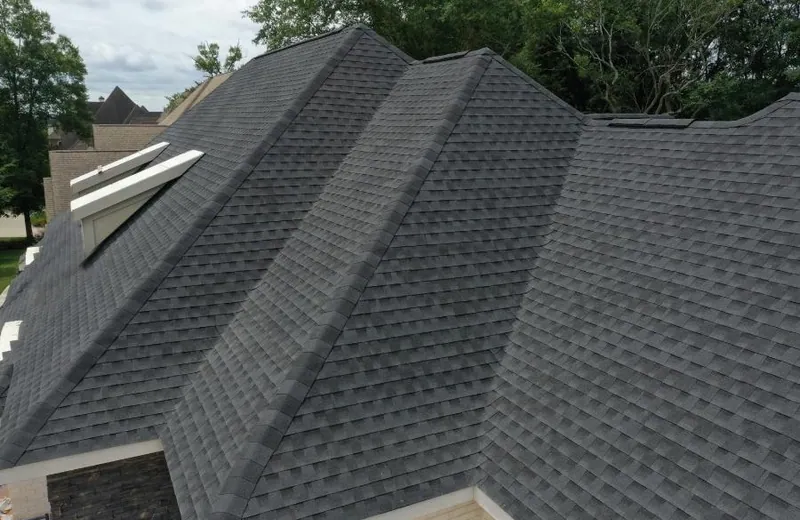
Asphalt Shingle Roofing

Asphalt shingle installation, including architectural shingles, 3-tab shingle roofing, and designer profiles for homes that need to meet HOA standards.

How we do it
We install with high-wind nailing patterns, starter strips at the eaves and rakes, and ridge caps rated for wind uplift. We recommend algae-resistant shingles for shaded and lakefront slopes.
In Racine
Architectural shingles are standard in Somers, Pleasant Prairie and Franklin subdivisions, and we match HOA color rules. 3-tab still works for budget repairs and rental properties in the city.
Best for
Most homes and duplexes looking for good value, wind resistance and curb appeal.
Get a quote →
Racine Roof Repair Experts Roofing Contractor in Racine, WI project in Racine, WI (6)

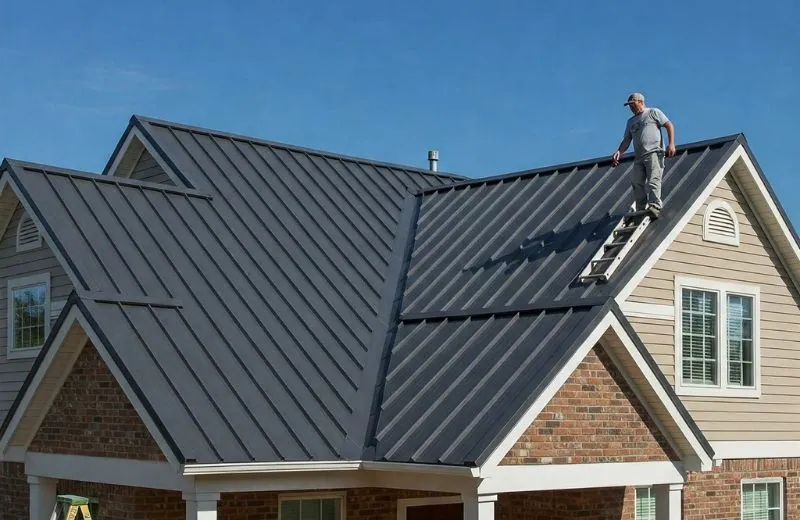
Metal Roofing

Metal roof installation, standing seam metal roofs, residential metal roofing, steel roofing, corrugated metal roofing, metal roof repair, and metal roof and steel roof flashing.

How we do it
Concealed-fastener standing seam goes on homes. Exposed-fastener corrugated or ribbed steel goes on barns and outbuildings. We install proper underlayment, snow guards where sliding snow is a risk, and trim matched to the panels.
In Racine
Standing seam is popular on lakefront homes in Wind Point and higher-end homes in Caledonia because it holds up to wind and sheds snow. Farms in Raymond and Union Grove rely on steel for pole barns and machine sheds.
Best for
Long-term owners, lakefront properties, and agricultural and outbuilding roofs.
Get a quote →
Racine Roof Repair Experts Roofing Contractor in Racine, WI project in Racine, WI (7)

Flat Roof & Commercial Roofing

Commercial roofing, commercial roof repair, flat roof repair, flat roof replacement, TPO roofing, EPDM rubber roofing, roof coating application, and roof waterproofing.

How we do it
We do core cuts and moisture checks, then decide whether to repair, coat or replace. New systems include tapered insulation for drainage and heat-welded TPO or fully adhered EPDM seams.
In Racine
We work on Downtown and Old Main Street brick commercial blocks, Uptown flats with rear porch roofs, and garages across Racine and Kenosha, where ponding and freeze-thaw tear apart seams.
Best for
Building owners, landlords and businesses with low-slope roofs that pond, blister or leak.
Get a quote →
Racine Roof Repair Experts Roofing Contractor in Racine, WI project in Racine, WI (8)

Specialty Roofing: Slate, Tile, Cedar & Copper

Slate roof installation and repair, tile roofing, cedar shake roofing, and copper roofing for bays, dormers, turrets and accent areas.

How we do it
We handle these materials carefully, fasten them with copper or stainless, use proper battens or underlayment, and match historic profiles when replacing pieces.
In Racine
Victorian and period homes in the Southside Historic District and lakefront estates often have slate, tile or copper details. Removing those materials may need Landmarks Commission review, and we plan around that.
Best for
Historic and high-end homes where character and longevity count for more than upfront cost.
Get a quote →
Racine Roof Repair Experts Roofing Contractor in Racine, WI project in Racine, WI (9)

Flashing, Chimney & Drip Edge

Roof flashing, chimney flashing repair, roof drip edge flashing, step and counterflashing, and sidewall and valley flashing.

How we do it
We remove the old tar patches, install step flashing and reglet-cut counterflashing, add crickets behind wide chimneys, and use corrosion-resistant metals.
In Racine
Original brick chimneys on Racine's older homes and corrosion near the lake make flashing the most common leak source we find.
Best for
Leaks at chimneys, walls, skylights and eaves, or wherever you see tar patching.
Get a quote →
Racine Roof Repair Experts Roofing Contractor in Racine, WI project in Racine, WI (10)

Inspection, Maintenance & Restoration

Roof inspection, roof maintenance, roof restoration, and storm damage assessments with photo documentation.

How we do it
We do a hands-on inspection of the roof surface and attic, take photos, and give you a written report that ranks repairs by urgency.
In Racine
A fall check before the snow arrives and a spring check after the thaw catch most problems early on Racine roofs.
Best for
Home buyers, landlords, post-storm insurance claims, and aging roofs.
Get a quote →
Racine Roof Repair Experts Roofing Contractor in Racine, WI project in Racine, WI (11)

Emergency Tarping & Storm Response

Emergency roof repair, emergency roof tarping, and roof tarp installation after wind, hail, falling limbs or ice damage.

How we do it
We fasten heavy-duty tarps over battens to keep water out and photograph the damage for insurance.
In Racine
After severe storms between April and August, we secure Racine-area roofs quickly so you aren't stuck waiting through the backlog.
Best for
Open roofs, active leaks during storms, and fallen-tree damage.
Get a quote →
Racine Roof Repair Experts Roofing Contractor in Racine, WI project in Racine, WI (12)

Ventilation, Soffit, Fascia & Gutter Guards

Roof ventilation installation, soffit and fascia installation, and gutter guard installation.

How we do it
We balance intake and exhaust ventilation, replace rotted fascia using lead-safe practices on pre-1978 homes, and install guards that hold up under snow load.
In Racine
Rotted fascia and blocked soffits are common on older Racine homes and feed both ice dams and early shingle failure.
Best for
Homes with ice dams, hot attics, rotted trim, or clogged gutters.
Get a quote →
Common problems

Common Roofing Problems in Racine and Southeast Wisconsin

Most of the roof calls we get in Racine County trace back to a handful of causes: the lake's weather, attics that were never built to modern standards, and materials that have reached the end of their life. Here's what we see most often, why it happens here, and the warning signs to watch for.

Emergency

Ice Dams and Winter Leaks

Heat escaping from the attic melts snow on the upper roof. That water runs down and refreezes at the cold eave, building a ridge of ice. Meltwater then backs up behind the ice, works under the shingles and leaks into soffits, walls and ceilings.

Why it happens here: Racine sees freeze-thaw swings all winter, and lake-enhanced storms leave heavy snow loads on roofs. The bigger issue is the attics. Pre-1940 homes and 1950s Cape Cods often have little insulation, blocked soffit vents and knee-wall spaces that leak warm air right at the roofline. Many older roofs also went on before ice barrier underlayment was required, so there's nothing at the eaves to stop water once it backs up. A week of single-digit nights followed by a 38°F afternoon is all it takes.

Signs to look for

  • Thick ice ridges along gutters and eaves
  • Icicles hanging from soffits rather than just gutter edges
  • Water stains on ceilings near exterior walls
  • Damp or peeling paint below windows
  • Frost or wet insulation in the attic
  • Sagging or ice-packed gutters

Local patterns: Ice dams are especially common on Cape Cods in Elmwood Park and Mount Pleasant, on balloon-framed two-stories in Uptown and West Racine, and on north-facing eaves along North Beach. January and February bring the most calls, usually after a thaw follows a heavy snow.

How we fix it

We remove the ice safely with steam, without chipping into shingles. Then we stop the active leak, document the interior damage, and fix the cause with better ventilation, air sealing and ice barrier underlayment.

Serious

Hail and Wind Storm Damage

Hail bruises asphalt shingles and knocks off the protective granules. Strong straight-line winds break the seal strips, lift or crease tabs, and tear off ridge caps and drip edge. That leaves the roof open to the next rain.

Why it happens here: Southeast Wisconsin's severe-weather season runs from about April through August, with thunderstorm lines, hail and the occasional derecho crossing Racine and Kenosha counties. Homes near the lake catch stronger, steadier onshore gusts. Shingles that went on with the minimum four nails, or with nails driven high, are the first to let go. Hail damage often can't be seen from the ground, so many homeowners don't know there's a problem until a leak shows up months later.

Signs to look for

  • Shingles or ridge caps in the yard
  • Granules piling up in gutters and downspouts
  • Dark, soft dents on shingles
  • Creased or lifted shingle tabs
  • Dented gutters, vents or metal flashing
  • New leaks after a storm

Local patterns: Wind damage is most common on exposed lakefront homes in Wind Point and Elmwood Park. Hail tends to hit open suburban subdivisions in Mount Pleasant, Caledonia, Somers and Pleasant Prairie, and door-knockers flood those neighborhoods within days of a storm.

How we fix it

We photograph and document the damage for your insurance claim, tarp or patch right away if needed, and then repair or replace using high-wind nailing patterns.

Serious

Failing Chimney Flashing

Flashing is the metal that seals the joint where a brick chimney meets the roof. Once it pulls away, corrodes, or was just smeared with tar, water runs down the brick and into the attic, framing and walls.

Why it happens here: Lots of older Racine homes still have their original brick chimneys, and the mortar joints have been through decades of freeze-thaw. Flashing expands in the summer and shrinks in the cold, which loosens counterflashing and cracks caulk. Earlier roofers often covered the problem with roofing cement instead of cutting proper counterflashing into the mortar. Lake humidity speeds up corrosion on galvanized steel. The result is a slow leak that can rot the framing for years before a stain ever shows up indoors.

Signs to look for

  • Water stains on the ceiling or wall beside the chimney
  • Thick tar or caulk around the chimney base
  • Loose or rusted metal at the chimney
  • Crumbling mortar joints or spalled brick
  • Damp framing around the chimney in the attic
  • Musty smell in upstairs rooms

Local patterns: We see this all the time on Foursquares and Victorians in the Southside Historic District, Lincoln-King and Uptown, and on older homes in Kenosha's Lakeshore area and Cudahy. Problems usually show up in spring after the snow melts.

How we fix it

We remove the old patches, install step flashing with counterflashing reglet-cut into the mortar, add a cricket on wide chimneys, and seal everything with corrosion-resistant metal.

Moderate

Rotted Plank Sheathing and Multiple Shingle Layers

Many older roofs have two or more shingle layers sitting on original board sheathing or spaced skip boards. Over time those boards rot, split or sag, and they no longer hold modern roofing nails securely.

Why it happens here: Racine's pre-1940 housing was built with plank or skip sheathing that was meant for wood shakes. Decades of re-roofing over the top trapped moisture, especially in attics with poor ventilation where condensation forms all winter. Wisconsin code allows only two shingle layers, and today's ice barrier requirements mean the roof has to come down to the deck anyway. This hidden condition is the biggest reason roof replacement bids on older Racine homes go up after work starts, unless the contractor plans for it up front.

Signs to look for

  • Wavy or sagging rooflines
  • Spongy spots when walking the roof
  • Daylight visible between boards in the attic
  • Shingles that won't lie flat
  • Two or more layers visible at the eave edge
  • Nails backing out or popping up

Local patterns: This is typical of worker cottages, bungalows and duplexes in Downtown, West Racine and Lincoln-King. We see the same thing in older parts of South Milwaukee, St. Francis and Kenosha.

How we fix it

We do a full tear-off and re-deck with plywood or OSB. Re-decking gets a line-item price in your written estimate so there are no surprises mid-job.

Serious

Ponding and Seam Failure on Flat Roofs

Flat and low-slope roofs don't shed water quickly. When water sits in low spots, freezes and thaws, it pulls apart seams, splits membranes and gets into the insulation and deck below.

Why it happens here: Downtown Racine's brick commercial blocks, flats with rear porches, and detached garages often have built-up, modified bitumen, EPDM or older TPO roofs. Racine's heavy snow loads and repeated freezing put strain on every seam. Clogged scuppers and sagging decks hold water for days at a time. Many of these roofs have been patched over and over instead of being properly restored.

Signs to look for

  • Standing water 48 hours after rain
  • Cracked, blistered or alligatored surface
  • Seams pulling apart at edges
  • Ceiling stains in top-floor units
  • Wet or crushed insulation
  • Debris or ice at drains and scuppers

Local patterns: We see this mostly on Downtown and Old Main Street commercial buildings, upper/lower flats in Uptown, and garages and porches all over Racine and Kenosha. It gets worse after late-winter thaws.

How we fix it

We repair seams, fix drainage, apply a coating or reinforced patches, or replace the roof with TPO or EPDM tapered for positive drainage.

Moderate

Poor Attic Ventilation

An attic without balanced intake and exhaust traps heat in summer and moisture in winter. That cooks shingles from underneath, feeds ice dams and lets mold and frost build up on the sheathing.

Why it happens here: Most of Racine's older homes were built before anyone thought about attic ventilation, and later remodels often covered soffit vents. Humid lake summers above 80°F bake shingles from below, and cold winters condense household moisture on the underside of the roof deck. Cape Cod knee walls and finished attics are especially hard to vent. On many roofs we inspect, ventilation is the hidden reason the shingles wore out early.

Signs to look for

  • Frost or dark staining on attic sheathing
  • Curling or blistering shingles
  • Hot upstairs rooms in summer
  • Recurring ice dams
  • Musty attic odor
  • Painted-over or missing soffit vents

Local patterns: Ventilation problems are common in Cape Cods and split-levels in Mount Pleasant, Sturtevant and Caledonia, and in balloon-framed homes across the city. You'll see frost in the attic on cold January mornings and hear complaints about stifling bedrooms in July.

How we fix it

We calculate the needed net free area and then install continuous soffit intake, ridge vents and baffles, sealing attic bypasses where we can reach them.

Minor

Moss, Algae Streaks and Rusting Fasteners

Dark algae streaks and moss hold moisture against the shingles, lift the tabs and wear away granules. Salty, humid lake air also rusts exposed nails, vent flanges and older flashing.

Why it happens here: Fog and humidity off Lake Michigan keep shaded north slopes damp for long stretches, which is ideal for algae and moss. Mature trees in older neighborhoods add shade and leaf litter. On lakefront homes, steady onshore wind carries moisture that corrodes plain steel parts much faster than it would inland.

Signs to look for

  • Black or green streaks on north-facing slopes
  • Moss clumps along shingle edges
  • Lifted or curled tabs
  • Rust stains running from vents or flashing
  • Granule loss in shaded areas

Local patterns: This is most noticeable along North Beach and the lakefront, in Wind Point, and under the tree canopy in Elmwood Park and the Southside.

How we fix it

We clean gently, never with a pressure washer. Then we replace corroded parts with stainless or coated metal and recommend algae-resistant shingles when it's time to replace.

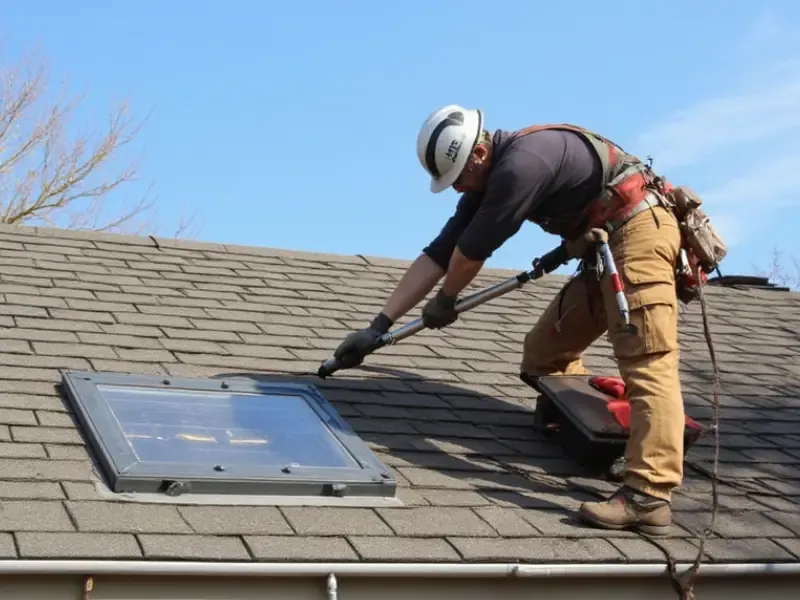
Racine Roof Repair Experts Roofing Contractor in Racine, WI project in Racine, WI (3)
How it works

How Our Roofing Process Works

There's no pressure and no guessing about cost. Here's what to expect from the first call to the final cleanup, whether you need a winter leak fixed or a full re-roof.

  1. Call or Request an Inspection

    Same day to a few days; emergencies get priority
    • We ask about leaks, roof age, recent storms and any ice dams
    • We set up a time that works around tenants or your work schedule
    • For active leaks or ice dams, we prioritize stopping the water first

    Local note: After big summer storms and during January thaws, we triage by urgency so active leaks get handled first.

  2. Roof and Attic Inspection with Photos

    About 45–90 minutes on site
    • We inspect shingles, flashing, valleys, vents, gutters and chimneys
    • We check the attic for ventilation, insulation, frost and rotted decking
    • We photograph every problem we find
    • We note layer count and sheathing type at the eaves

    Local note: On pre-1940 homes, we specifically check for plank or skip sheathing and old box or built-in gutters.

  3. Clear Explanation and Written Estimate

    Typically within 1–3 days
    • We walk you through the photos in plain English
    • We give you repair-versus-replace options with honest pros and cons
    • You get an itemized written estimate, including re-decking if it's likely
    • We go over financing options if you need them

    Local note: For storm damage, we document everything for your insurer and follow Wisconsin's storm-contracting law. We never offer to cover your deductible.

  4. Permits, Materials and Scheduling

    1–3 weeks for most replacements; repairs often sooner
    • We confirm permit requirements with your city or village building office
    • We check historic district or HOA approvals where they apply
    • We order materials and confirm colors
    • We schedule around the weather

    Local note: Racine, Mount Pleasant, Caledonia, Kenosha and other municipalities each have their own rules, and fall books up quickly before the snow.

  5. Installation, Cleanup and Final Walkthrough

    Repairs: hours; most replacements: 1–3 days
    • We protect landscaping, siding and driveways
    • We tear off, re-deck as needed, and install the ice barrier and underlayment
    • We install the roof with enhanced nailing, flashing and ventilation
    • We run a magnetic nail sweep and send completion photos

    Local note: On lakefront homes, we use wind-rated installation details and corrosion-resistant flashing.

About us

A Local Roofing Contractor You Can Count On

We're local, and we work on the roofs this area actually has: Victorian rooflines in the Southside Historic District, upper/lower flats in Uptown and Lincoln-King, 1960s ranches and Cape Cods in Mount Pleasant and Elmwood Park, and lakefront homes in Wind Point that need extra wind and corrosion protection. We pay close attention to fastening, underlayment and ventilation because those three things decide how a roof holds up here. Every visit includes photos, a plain-English explanation and a written estimate.

Racine homeowners and landlords tend to hire on word-of-mouth, and we work to earn that. We fix roofs properly instead of patching over problems, and we back every visit with photos, a clear explanation and a written estimate.

  • Bonded
  • Insured
  • Financing available
  • Bonded & Insured
  • Financing Available
Why choose us

Why Racine Homeowners and Landlords Choose Us

  • We Know Racine Roofs

    A 1915 Foursquare in the Southside, a 1962 ranch in Mount Pleasant and a lakefront home in Wind Point all fail in different ways. We know what's usually hiding under the shingles on each one, whether that's skip sheathing, buried box gutters, tarred-over chimney flashing or a Cape Cod knee wall leaking heat. That local knowledge means more accurate estimates, fewer surprises once the old roof comes off, and repairs that hold up in a Lake Michigan winter, not just until the next thaw.

  • Bonded and Insured

    Every spring and summer, hail and wind bring out-of-state storm chasers to Racine County. Some of them disappear before the first leak or warranty question comes up. We're a local company, and we're bonded and insured, so you and your property are protected if something goes wrong on the job. We follow Wisconsin's storm-damage contracting rules, including the ban on waiving deductibles. We'll never pressure you to sign on the spot, and we encourage you to compare our written estimate with others.

  • We Fix the Cause, Not Just the Symptom

    Older Racine homes deserve proper repairs, not another layer of tar. If a chimney leaks, we install real step flashing and counterflashing. If ice dams come back every year, we look at the attic ventilation and air leaks behind them, not only the ice. We pay close attention to fastening, underlayment and ventilation, because those three details decide whether a roof lasts its rated life on the lakeshore or wears out early.

  • Photos, Plain Talk and Written Estimates

    Every visit includes photos of what we found, an explanation you can follow without a roofing dictionary, and a written estimate. If decking is likely to need replacing, we price it up front so you aren't hit with a surprise change order halfway through the tear-off. Landlords who own property in Racine but don't live nearby especially like being able to see the condition of their roof without climbing a ladder.

  • Honest Repair-vs-Replace Advice and Financing

    Plenty of Racine roofs have years left with a well-done repair, and we'll tell you when that's the case. When replacement does make sense, we can lay out phased options, like fixing the leaking chimney now and re-roofing next season. Financing is available to help spread out the cost of a bigger project, which matters to long-time homeowners and small landlords managing several properties.

  • Winter and Emergency Response

    Leaks don't wait for good weather, and in Racine they often show up in February. We handle steam ice dam removal, emergency tarping, snow and ice removal, and winter leak repair to stop water coming in when a full replacement isn't practical. After summer storms, we tarp and secure damaged roofs quickly and document everything for your insurance claim.

  • Full Range of Roofing Systems

    We work with asphalt shingles, standing-seam and corrugated steel, TPO and EPDM flat roofs, and slate, tile, cedar and copper. So we can recommend what's right for your building instead of what's easiest for us to sell. That might be standing seam for a windy Wind Point lot, a TPO flat roof for a Downtown storefront, steel for a Raymond pole barn, or HOA-approved architectural shingles in Pleasant Prairie.

20 miService Radius Around Racine
16Communities Served
Every VisitPhotos and Written Estimate Included
Year-RoundWinter Leak and Ice Dam Service
Service areas

Areas We Serve Around Racine

Our crews work within about 20 miles of Racine, from the lakefront neighborhoods to the farm country west of I-94 and north into southern Milwaukee County. Each community has its own housing stock and building department, and we plan every job around both.

Racine and the Lakefront

  • RacineDowntown, Southside Historic District, West Racine, Uptown, Lincoln-King and North Beach
  • Wind PointHigh-value lakefront homes facing strong onshore wind
  • Elmwood ParkPostwar homes under a mature tree canopy
  • Mount PleasantRanches, Cape Cods and new I-94 corridor subdivisions
  • Sturtevant1950s–70s homes and newer infill

Western Racine County and Kenosha County

  • CaledoniaSuburban homes plus rural properties to the west
  • RaymondFarmhouses, pole barns and metal roofing
  • Union GroveSmall-town homes and agricultural buildings
  • SomersGrowing subdivisions with HOA guidelines
  • KenoshaUptown and Lakeshore older homes and flats
  • Pleasant PrairieNewer homes reaching their first replacement

Southern Milwaukee County

  • Oak CreekMix of postwar and newer construction
  • FranklinLarger suburban homes and HOA communities
  • South MilwaukeeEarly-20th-century working-class homes
  • CudahyOlder bungalows and duplexes near the lake
  • St. FrancisLakeside homes with corrosion and wind exposure

We serve properties within roughly a 20-mile radius of Racine. If you're near the edge of that range, call and we'll confirm whether we can get to you.

Pricing

How Much Does Roofing Cost in Racine, WI?

Roofing costs in Racine depend heavily on what's under your current shingles and how complex the roof is. The ranges below are typical for the area. Your written estimate will be based on your specific roof after we inspect it and take photos.

Ice dam steaming and leak repair

$600 – $1,800

Single-story Cape Cod in Elmwood Park, eaves cleared with steam and a small shingle repair

Chimney flashing rebuild

$900 – $2,500

Brick chimney on a two-story Uptown home, new step and counterflashing plus a cricket

Asphalt shingle roof replacement

$11,000 – $18,000

1,800 sq ft ranch in Mount Pleasant, one-layer tear-off, architectural shingles, new ventilation

Older home replacement with re-decking

$20,000 – $38,000

Steep two-story Racine duplex or Victorian, two layers removed, full re-deck, ice barrier, complex flashing

Primary Factor

Roof Size, Pitch and Complexity

Price is calculated per roofing square (100 sq ft), but steepness and complexity drive labor. A simple 4/12 ranch in Mount Pleasant goes quickly. A 12/12 Queen Anne in the Southside with turrets, dormers and six valleys needs extra safety setup, more flashing and far more labor hours. Very steep roofs can cost 30–50% more per square than walkable ones.

Primary Factor

Decking Condition and Layers to Remove

Many older Racine homes have two shingle layers over plank or skip sheathing. Tearing off extra layers adds disposal cost, and re-decking with plywood or OSB often adds $2,500–$7,000 on a typical older home. We include likely decking in the estimate so the budget stays realistic.

Major Factor

Material Choice

3-tab shingles are the budget option. Architectural shingles cost a little more and handle wind better. Standing-seam metal usually runs two to three times the price of shingles but can last decades longer. TPO and EPDM fall in between for flat roofs. Slate, tile, cedar and copper are premium choices, sometimes required for historic accuracy.

Secondary Factor

Flashing, Chimneys, Ventilation and Trim

Rebuilding chimney flashing, adding ridge and soffit ventilation, replacing rotted fascia and soffit, and dealing with old box gutters can each add a few hundred to several thousand dollars. These items often fix the real cause of ice dams and leaks, so they're usually money well spent.

Situational Factor

Season, Access and Permits

Winter emergency work, ice dam steaming, tight city lots with no driveway access, and permit or historic review requirements can all affect the price. Booking early in the April–November season helps you avoid the fall rush.

Financing is available for larger repairs and full replacements, so you can deal with a failing roof now and spread out the cost.

A properly installed roof with the right underlayment and ventilation protects against ice dam damage, which can cost more to fix inside than the roof repair itself, and adds real resale value as home values rise along the I-94 corridor.

FAQ

Roofing FAQs for Racine Homeowners

How much does a new roof cost in Racine?

Most asphalt shingle replacements on typical Racine-area homes run about $11,000 to $18,000 for a straightforward ranch or Cape Cod. Steep, complex older homes and duplexes that need two layers removed and new decking usually fall between $20,000 and $38,000 or more. Standing-seam metal, slate and other premium materials cost more. The two biggest variables are roof pitch and the condition of the decking under your shingles. We inspect the attic and eaves before pricing, so our written estimate accounts for likely re-decking instead of springing it on you mid-job. Financing is available.

Can you fix an ice dam leak in the middle of winter?

Yes. Winter leak repair is a big part of what we do. We use low-pressure steam to cut through the ice dam and open drainage channels without damaging your shingles. Hammering or chipping at the ice often causes more leaks than it stops. Once the water is stopped, we photograph the damage and make temporary or permanent repairs depending on conditions. When the weather allows, we address the underlying cause, which is usually poor attic insulation, air leaks or blocked ventilation, so you aren't fighting the same ice dam next January.

Do I need a permit to replace my roof in Racine or Mount Pleasant?

Often, yes. The rules vary by community. The City of Racine, Mount Pleasant, Caledonia, Kenosha, Franklin, Oak Creek and other municipalities each have their own building inspection office, and many require a permit for full tear-offs, re-decking or structural work. Re-roofing homes falls under Wisconsin's Uniform Dwelling Code, which also requires ice barrier underlayment at the eaves. If your home is in a local historic district such as the Southside, changes to material or color may need Landmarks Preservation Commission review. HOAs may have their own shingle rules. We confirm the requirements before work starts.

How long does a roof replacement take?

Most single-family replacements in the Racine area take one to three days once work begins. A simple ranch can often be finished in a day. A steep Victorian or a duplex with multiple layers and full re-decking may take three days or longer. Weather is the biggest wildcard. Lake-effect rain or high winds can push the schedule, and we won't open a roof when a storm is coming. Expect one to three weeks between signing and starting during busy months. Fall fills up fast before the snow, so booking in spring or summer gives you more flexibility.

Should I repair or replace my roof?

Repair usually makes sense if the roof is under about 15 years old, the damage is limited to one area (like a chimney or a few blown-off shingles), and the decking is solid. Replacement is usually the better value when the roof is 20 years or older, already has two layers, has widespread hail bruising or granule loss, or shows sagging and soft spots. We'll show you photos and give you an honest recommendation. If a well-done repair buys you several more years, we'll tell you that, and phased repairs are an option for tighter budgets.

How can I prevent ice dams on my Racine home?

The best prevention is keeping the roof deck cold so snow doesn't melt unevenly. That means sealing attic air leaks around light fixtures, chimneys and attic hatches, adding insulation, and making sure soffit intake and ridge exhaust vents are clear and balanced. During re-roofing, ice and water barrier at the eaves adds important backup protection. Keeping gutters clear in late fall and safely removing heavy snow from the lower few feet of the roof after big storms also help. Heat cable can work on problem eaves, but it's a supplement, not a fix for poor ventilation.

When should I call a roofer instead of waiting?

Call right away if water is coming inside, if ice ridges are forming at your eaves with icicles hanging from the soffits, or if a storm has torn off shingles, ridge caps or flashing. Exposed decking can let water in with the next rain. You should also schedule an inspection if you find granules piling up in the gutters, curling or cracked shingles, stains near your chimney, or frost in your attic. Waiting turns a few-hundred-dollar flashing repair into rotted framing, ruined insulation and interior drywall work. Spring and fall inspections catch most issues early.

Will you help with my storm damage insurance claim?

Yes. We inspect the roof, photograph the hail and wind damage, and provide documentation and a written estimate you can share with your insurance company. We follow Wisconsin's storm-damage contracting law (Wis. Stat. 100.65). That means we won't promise to pay or rebate your deductible, and you have the right to cancel within three business days if your insurer denies the claim. Be cautious with out-of-state door-knockers after big storms. A local, bonded and insured contractor will still be around if questions come up later.

Find us

Serving Racine, WI & nearby

1412 Washington Ave, Unit A, Racine, WI, 53403

(262) 404-4056

Mon-Sun: 7:00 AM - 7:00 PM

Get driving directions
Get in touch

Get Your Racine Roof Inspected Before the Next Storm or Freeze

Whether you have water dripping from the ceiling, ice building up on the eaves, or a roof that's simply getting old, we'll show you exactly what's going on and what it will take to fix it.

  • A hands-on roof and attic inspection
  • Photos of every problem we find
  • A plain-English explanation of your options
  • An itemized written estimate with no surprise re-decking charges
  • Honest repair-versus-replace advice
  • Financing available on larger projects
  • A bonded and insured local crew

We serve Racine, Mount Pleasant, Sturtevant, Wind Point, Caledonia, Elmwood Park, Somers, Kenosha and other communities within about 20 miles.

Active leak, ice dam or storm damage? Call now. We prioritize emergency tarping, ice dam steaming and winter leak repair.

Call (262) 404-4056

Request your free estimate

No obligation. Fast, honest quotes.

🔒 Your information is never shared.

CallFree estimate